Physical education is an important part of learning that focuses on physical activity, movement skills, fitness, health, teamwork, and personal development. It is commonly included in school and college programs to help students develop healthy habits while improving their physical abilities. Beyond sports and exercise, it can teach discipline, cooperation, confidence, communication, and goal setting. Regular participation in physical activities can also support concentration and overall well-being. A well-designed program can include activities such as running, stretching, strength exercises, games, athletics, swimming, and team sports. By combining movement with knowledge about health and fitness, students can develop habits that may continue throughout their lives.
What Is Physical Education?
Physical education is an educational subject that uses planned physical activities to support the physical, mental, emotional, and social development of students. It is more than simply playing games during school hours. Students can learn how the body moves, how exercise affects health, how to participate safely in physical activities, and how to work effectively with others.
Lessons can vary depending on the age and ability of students. Younger learners may focus on fundamental movement skills such as running, jumping, balancing, throwing, and catching. Older students may participate in structured sports, fitness training, athletics, recreational activities, and health-related lessons.
The broader purpose is to encourage students to understand the connection between regular movement and a healthy lifestyle.
Importance of Physical Education in Schools
Schools provide an important environment for developing healthy habits. Students spend a significant amount of their day in educational settings, making school-based activity an effective way to introduce regular movement.
A well-planned program gives students opportunities to become physically active while learning important concepts related to fitness and health. It can also provide a break from extended periods of sitting and classroom work.
Participation may help students develop better coordination, endurance, flexibility, balance, and strength. At the same time, group activities can create opportunities for communication and cooperation.
Physical education can also introduce students to different forms of exercise. A student who does not enjoy traditional competitive sports may find an interest in swimming, walking, dance, yoga, athletics, or fitness activities.
Physical Fitness and Exercise
Fitness is one of the major components of physical education. Students can learn about different aspects of fitness and how they contribute to everyday activities.
Cardiovascular endurance supports activities that require sustained movement. Muscular strength and endurance help the body perform physical tasks. Flexibility contributes to a wider range of movement, while balance and coordination help individuals control their bodies effectively.
Exercise programs should be appropriate for a person’s age, physical condition, and ability level. Teachers can modify activities to make participation more accessible and safe.
Learning how to warm up, cool down, use equipment correctly, and follow safety instructions is also an important part of fitness education.
Development of Motor Skills
Motor skills are another important area of learning. Basic movement abilities provide a foundation for many recreational and sporting activities.
Students may practice locomotor skills such as walking, running, hopping, skipping, and jumping. They may also develop object-control skills through activities involving throwing, catching, kicking, striking, and dribbling.
As students become more comfortable with these movements, they can apply them in more complex activities and sports.
Developing these skills at an early age can help children participate more confidently in physical activities. It can also make exercise and recreation more enjoyable because students have greater control over their movements.
Mental and Emotional Benefits
Physical activity is often associated with more than physical fitness. Regular movement can contribute to overall psychological well-being.
Exercise provides an opportunity for students to take a break from academic tasks and participate in activities that require movement and attention. Physical education classes can also provide opportunities to set goals, overcome challenges, and recognize personal improvement.
For some students, learning a new skill or improving performance can build confidence. Activities that involve teamwork may also encourage communication and social interaction.
Teachers can create an inclusive environment where students focus on participation, learning, progress, and healthy competition rather than simply comparing performance.
Social Skills and Teamwork
Many physical education activities involve working with classmates. Team sports and group exercises can help students understand cooperation, communication, responsibility, and respect.
Students may need to follow rules, communicate with teammates, share equipment, and make decisions during activities. These experiences can help develop interpersonal skills.
Sports can also teach students how to respond to both success and disappointment. Learning to follow rules and respect opponents can reinforce positive behavior.
Not every activity needs to be competitive. Cooperative games, group challenges, dance, fitness circuits, and recreational activities can also encourage meaningful social interaction.
Physical Education and Healthy Habits
One of the long-term goals of physical education is to help students understand healthy lifestyle choices.
Students can learn why regular physical activity matters and how different types of exercise affect the body. Lessons may also introduce concepts such as hydration, rest, nutrition, injury prevention, and recovery.
The goal is not simply to make students active during school hours. Instead, education can help them understand how movement fits into everyday life.
Walking, cycling, recreational sports, home workouts, swimming, and other forms of activity can become part of an individual’s routine outside school.
Different Types of Physical Education Activities
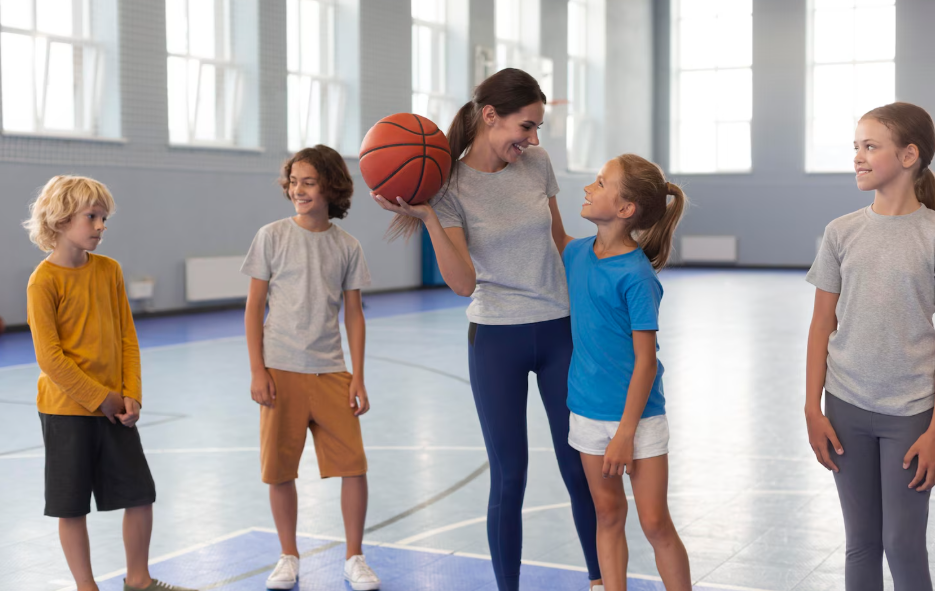
A physical education program can include a wide range of activities. Traditional team sports may include football, basketball, volleyball, hockey, and cricket. Individual activities can include athletics, swimming, gymnastics, running, and fitness training.
Schools may also introduce recreational activities such as dance, yoga, stretching, and outdoor games.
The variety of activities is important because students have different interests and abilities. Offering multiple options can increase opportunities for students to find activities they enjoy.
Teachers can also adjust the intensity, rules, equipment, or duration of an activity to accommodate different skill levels.
Role of Teachers in Physical Education
Teachers play an important role in creating effective physical education experiences. They plan lessons, explain techniques, demonstrate activities, monitor safety, and provide feedback.
A teacher may divide a class into smaller groups so students receive more opportunities to participate. They can also adapt activities when students have different physical abilities or levels of experience.
Good instruction focuses on both skill development and understanding. Students should know not only how to perform an activity but also why proper technique, safety, and preparation matter.
Teachers can encourage students by recognizing improvement and effort while creating a respectful environment for everyone.
Safety in Physical Education
Safety should be an essential part of every physical activity program. Before beginning an activity, students should understand relevant rules and instructions.
Warm-up exercises can prepare the body for movement, while cool-down activities can help transition the body back to a resting state.
Equipment should be appropriate and maintained properly. Playing areas should also be checked for potential hazards.
Students should learn correct techniques and understand when they should stop an activity because of pain, dizziness, or other concerning symptoms. Teachers should follow appropriate school procedures for injuries and emergencies.
Inclusive Physical Education
An effective program should provide meaningful participation opportunities for students with different abilities, interests, and experience levels.
Activities can be modified by changing equipment, distance, rules, movement patterns, or team structures. For example, a larger or softer ball may make an activity easier for some students, while reducing the playing area may make certain activities more manageable.
Inclusion does not necessarily mean every student performs an activity in exactly the same way. Instead, the goal is to provide suitable opportunities for students to learn and participate.
This approach can help create a positive classroom environment where students feel included.
Physical Education and Academic Learning
Physical activity and academic learning do not have to be treated as separate areas of education. Physical education can reinforce skills such as problem-solving, following instructions, decision-making, communication, and goal setting.
For example, students participating in a team game may need to analyze situations, make quick decisions, and communicate with others.
Lessons can also connect physical activity with subjects such as biology, health science, mathematics, and social studies. Students may learn about muscles, energy expenditure, nutrition, measurement, statistics, or the history of sports.
These connections can make physical education a broader learning experience.
Technology in Physical Education
Technology is increasingly being used to support physical activity education. Fitness trackers, mobile applications, digital videos, heart-rate monitors, and other tools can provide information about physical activity.
Teachers may use video recordings to demonstrate movement techniques or help students analyze their performance.
Digital tools can also support goal setting and activity tracking. However, technology should complement physical participation rather than replace active learning.
Students should also understand that fitness measurements are only one part of health and should be interpreted appropriately.
Benefits Beyond the Classroom
The lessons learned through physical education can extend beyond school. Students may develop an interest in recreational activities that they continue during adulthood.
Skills such as goal setting, discipline, cooperation, time management, and persistence can also be useful in other areas of life.
A student who learns how to create a realistic fitness goal, practice consistently, and evaluate progress may apply similar habits to academic or personal goals.
Physical education therefore has the potential to contribute to lifelong learning and healthy living.
Challenges in Physical Education
Schools may face several challenges when developing physical education programs. Limited facilities, equipment, teaching time, large class sizes, and different student abilities can affect how activities are organized.
Some students may also feel uncomfortable participating because they have limited experience or concerns about performance.
Teachers can address these challenges by offering varied activities, adapting exercises, encouraging participation, and creating an environment where students can improve at their own pace.
The focus should remain on learning, health, movement, participation, and personal development.
How Students Can Get More From Physical Education
Students can benefit more from physical education by participating actively and approaching new activities with an open mind. Trying different sports and exercises can help them discover activities they enjoy.
Listening to instructions, using equipment safely, respecting classmates, and practicing skills regularly can also improve the learning experience.
Students should understand that physical ability develops over time. Progress does not always mean becoming the fastest or strongest person in the class. Improving technique, coordination, endurance, confidence, and consistency can also represent meaningful progress.
Conclusion
Physical education provides students with opportunities to develop movement skills, physical fitness, healthy habits, teamwork, confidence, and knowledge about active living. Its value extends beyond sports because many lessons involve communication, discipline, decision-making, goal setting, and personal responsibility. A varied and inclusive program can give students opportunities to discover activities that suit their interests and abilities. By learning how to move safely and maintain regular physical activity, students can build a foundation for healthier lifestyles. When combined with classroom learning, physical education can contribute to the development of well-rounded students prepared to make informed choices about activity and well-being.
FAQs
What is physical education?
Physical education is an educational subject that teaches physical activity, movement skills, fitness, health concepts, safety, teamwork, and participation in different forms of exercise and recreation.
Why is physical education important?
It gives students opportunities to develop physical skills and fitness while also learning about teamwork, discipline, goal setting, safety, and healthy lifestyle habits.
What activities are included in physical education?
Activities can include running, athletics, gymnastics, swimming, dance, yoga, fitness exercises, cricket, football, basketball, volleyball, and other individual or team activities.
Does physical education only focus on sports?
No. It can include fitness, movement skills, health education, safety, recreation, cooperation, goal setting, and knowledge about maintaining an active lifestyle.
How does physical education help students?
It can support physical fitness, coordination, movement skills, social interaction, confidence, and knowledge about healthy physical activity.
What skills can students learn through physical education?
Students can develop balance, coordination, strength, endurance, flexibility, communication, cooperation, decision-making, and goal-setting skills.
Can physical education support academic development?
Yes. Activities can involve problem-solving, following instructions, decision-making, communication, measurement, and goal setting, which can complement broader educational development.
How can physical education be made inclusive?
Teachers can modify equipment, rules, activity intensity, space, and instructions to provide meaningful participation opportunities for students with different abilities and experience levels.
What is the role of a physical education teacher?
A teacher plans activities, explains techniques, demonstrates skills, monitors safety, provides feedback, encourages participation, and adapts activities to meet students’ needs.
Can physical education encourage lifelong fitness?
Yes. By exposing students to different forms of activity and teaching them about fitness, safety, and healthy habits, physical education can help students develop an understanding of active living that may continue beyond school.